
 EN
EN



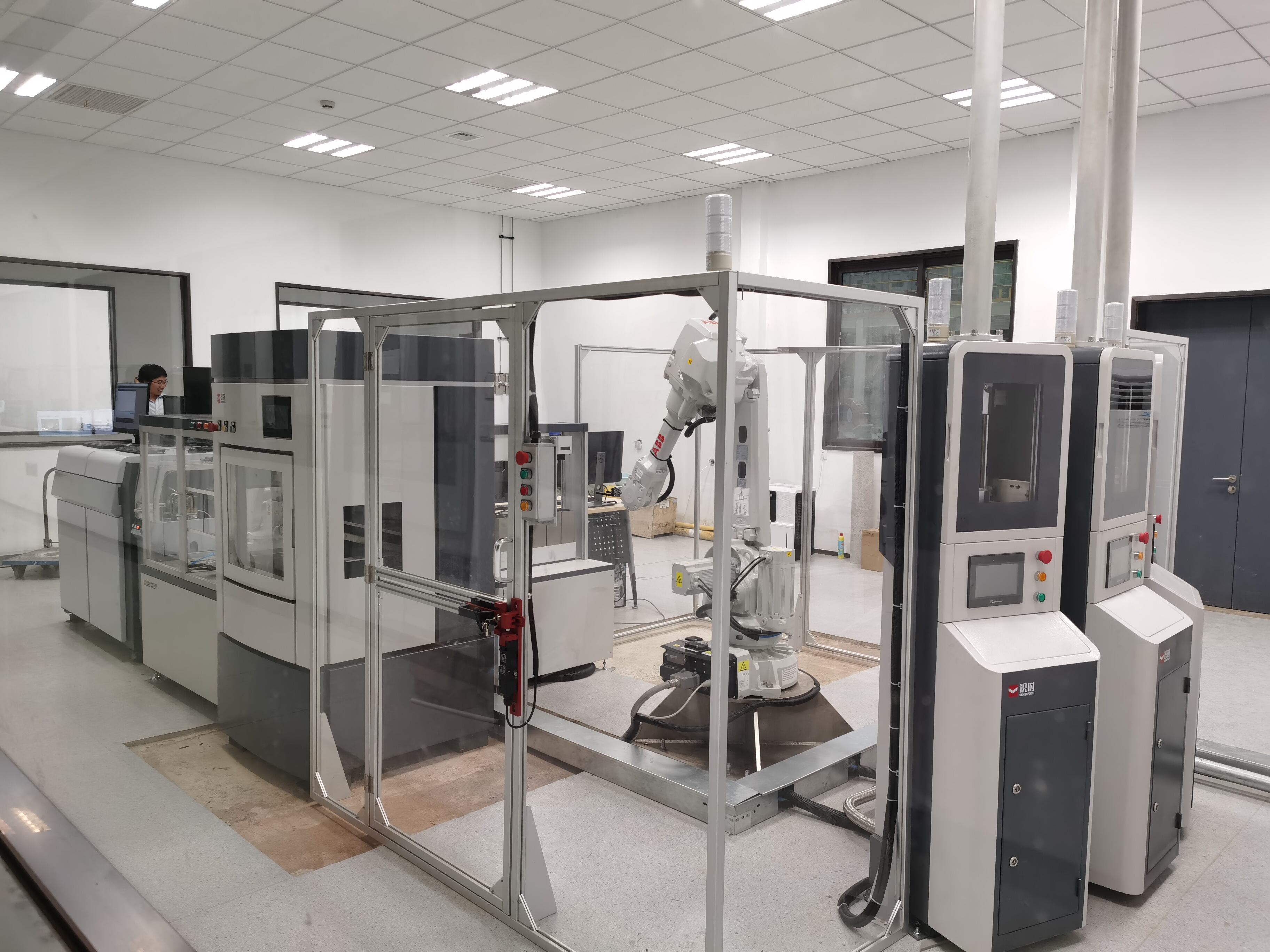
Choosing between fully automatic and semi-automatic systems is one of the most consequential decisions a manufacturing or industrial operation can make. The right level of automation can dramatically improve throughput, reduce labor costs, and elevate quality consistency. But selecting the wrong configuration for your operational context can lead to underutilized capital, workflow bottlenecks, and a return on investment that never materializes. Understanding the structural differences between these two system types — and how each aligns with specific production demands — is the foundation of a sound decision.
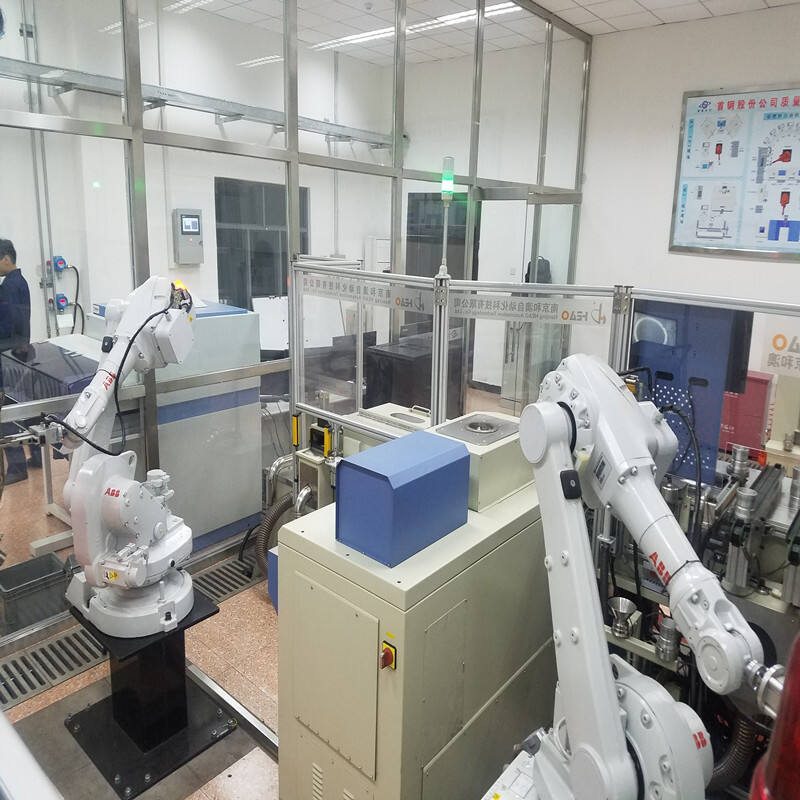
This article is designed to help operations managers, procurement leads, and engineering teams navigate the automation selection process with clarity. Rather than offering a generic overview of automation technology, the focus here is on the practical decision logic: what conditions favor full automation, what conditions favor semi-automatic configurations, and how to evaluate your own environment against those criteria. The goal is to give you a framework that leads to a confident, well-reasoned choice.
Understanding the Core Distinction Between Automatic and Semi-Auto Systems
What Defines a Fully Automatic System
A fully automatic system is designed to execute an entire process cycle — from input to output — without requiring human intervention at any stage. Once the system is initialized and parameters are set, automation handles sensing, decision-making, actuation, and quality verification independently. This architecture is built around closed-loop control, where sensors continuously feed data back into the system to maintain process consistency.
In industrial settings, full automation typically involves integrated conveyance, robotic handling, machine vision, and programmable logic controllers working in concert. The human role shifts from operator to supervisor — monitoring dashboards, managing exceptions, and performing scheduled maintenance. This model of automation is most powerful when process variables are well-understood and production volumes are high enough to justify the infrastructure investment.
The defining characteristic of full automation is its independence. The system does not pause, slow down, or require confirmation at intermediate steps. This makes it exceptionally well-suited to environments where speed, repeatability, and scale are the dominant performance requirements.
What Defines a Semi-Automatic System
A semi-automatic system divides the process between machine execution and human judgment. Certain steps — typically the physically demanding, repetitive, or high-speed ones — are handled by automation, while others require an operator to make a decision, reposition a component, or confirm a result before the cycle continues. This hybrid model of automation is not a compromise; it is a deliberate design choice suited to specific operational realities.
Semi-automatic configurations are common in industries where product variability is high, where regulatory requirements mandate human sign-off at critical checkpoints, or where the cost of full automation cannot be justified by current production volumes. The operator remains an active participant in the workflow, contributing judgment and dexterity that the automation layer does not replicate.
Understanding this distinction is essential because the decision between the two is not simply about how much automation you want — it is about where human involvement adds value and where it creates friction. A well-designed semi-automatic system leverages automation for its strengths while preserving human oversight where it genuinely matters.
Key Factors That Favor Full Automation
High-Volume, Repeatable Production Environments
Full automation delivers its greatest value in environments characterized by high production volumes and low process variability. When the same operation is performed thousands of times per shift with minimal variation in inputs, the economics of automation become compelling. The fixed cost of the automation infrastructure is amortized across a large number of units, driving down per-unit cost significantly over time.
Repeatability is the other critical factor. Automation excels when the task parameters are stable and well-defined. If your raw materials arrive within tight tolerances, your process steps are standardized, and your output specifications are consistent, a fully automatic system can maintain quality at a level that human operators simply cannot match over extended production runs. Fatigue, distraction, and variability are eliminated from the equation.
Industries such as automotive components, electronics assembly, and food packaging have long recognized this dynamic. The investment in automation at scale is not just about labor savings — it is about achieving a level of process control that becomes a competitive differentiator in quality-sensitive markets.
Speed and Throughput Requirements
When cycle time is a binding constraint, full automation is often the only viable path. Human operators have physical and cognitive limits that cap throughput regardless of how well a process is designed around them. Automation removes those limits, enabling cycle times measured in fractions of a second and sustained throughput rates that would be impossible with manual or semi-manual workflows.
This matters not just for raw output volume but for downstream scheduling and supply chain commitments. A fully automatic system with predictable cycle times allows production planners to make reliable capacity commitments. The consistency of automation translates directly into supply chain reliability, which has measurable value in B2B relationships where delivery performance is a key contract metric.
Key Factors That Favor Semi-Automatic Systems
Product Variability and Customization Demands
Semi-automatic configurations are the more practical choice when product variability is high. If your production runs involve frequent changeovers, custom specifications, or a wide range of SKUs, the flexibility of human judgment becomes a genuine asset rather than a liability. Full automation can handle variability, but programming and reconfiguring automated systems for every product variant introduces complexity and downtime that erodes the efficiency gains.
In contract manufacturing, specialty fabrication, and made-to-order production environments, semi-automatic systems allow operators to adapt quickly to changing requirements without extensive reprogramming. The automation layer handles the physically demanding or precision-critical steps, while the operator manages the variability. This division of labor is often more efficient than attempting to automate every aspect of a highly variable process.
The key insight is that automation is most effective when it is applied selectively. Trying to automate every step of a variable process can introduce more complexity than it resolves. Semi-automatic design acknowledges this reality and builds the workflow accordingly.
Capital Constraints and Phased Investment Strategies
Full automation requires substantial upfront capital investment. For many operations — particularly mid-sized manufacturers, startups scaling production, or facilities entering new product categories — the capital required for full automation is not available or not justifiable at the current stage of growth. Semi-automatic systems offer a practical path to capturing a significant portion of the productivity and quality benefits of automation at a fraction of the cost.
A phased automation strategy is a well-established approach in industrial operations. Beginning with semi-automatic systems allows an organization to build operational experience with automation, identify the highest-value opportunities for further investment, and generate the cash flow needed to fund subsequent automation upgrades. This approach reduces risk while still moving the operation meaningfully forward on the automation maturity curve.
It is also worth noting that semi-automatic systems are often easier to maintain and troubleshoot than fully automatic ones. The reduced complexity of the automation layer means that maintenance teams can resolve issues more quickly, reducing downtime and the dependency on specialized technical support.
Evaluating Your Operation Against the Decision Criteria
Mapping Process Steps to Automation Suitability
A structured evaluation begins with a detailed map of your current process steps. For each step, assess the degree of variability in inputs, the physical demands on operators, the precision requirements, and the frequency of the operation. Steps that are highly repetitive, physically demanding, and precision-critical are strong candidates for automation. Steps that require contextual judgment, frequent adaptation, or regulatory sign-off are better suited to human involvement, even within an otherwise automated workflow.
This mapping exercise often reveals that the optimal solution is neither pure full automation nor pure semi-automatic design, but a hybrid architecture where automation is applied intensively to the highest-value steps while human involvement is preserved where it genuinely adds value. The goal of automation is not to eliminate humans from the process — it is to deploy human capability where it is most effective.
Raw material inspection is a useful example of this logic. Automated inspection systems can process materials at speeds and consistency levels that manual inspection cannot match, making automation the clear choice for that step. But decisions about how to respond to inspection findings — whether to quarantine a batch, escalate to a supplier, or adjust downstream process parameters — may still benefit from human judgment, particularly in complex or novel situations.
Total Cost of Ownership Beyond the Purchase Price
The decision between full and semi-automatic systems should never be made on purchase price alone. Total cost of ownership encompasses installation, integration, training, maintenance, consumables, downtime costs, and the cost of future upgrades. Full automation systems typically have higher installation and integration costs, require more specialized maintenance expertise, and may involve longer lead times for spare parts and technical support.
Semi-automatic systems generally have lower total cost of ownership in the short to medium term, but this advantage narrows as production volumes increase. At high volumes, the labor cost associated with the human-operated steps in a semi-automatic system can exceed the annualized cost of the additional automation investment required to eliminate those steps. Running a total cost of ownership model across a realistic production volume range is essential to making a financially sound automation decision.
Organizations that have gone through this analysis often find that the crossover point — where full automation becomes more cost-effective than semi-automatic — occurs at a lower production volume than they initially assumed. This is because the productivity and quality benefits of automation compound over time in ways that are easy to underestimate in a static cost comparison.
Making the Final Decision: A Practical Framework
Aligning System Choice with Strategic Objectives
The automation decision should be anchored in your organization's strategic objectives, not just current operational metrics. If your growth strategy involves scaling production volume significantly over the next three to five years, investing in full automation now — even if current volumes do not fully justify it — may be the more strategically sound choice. Conversely, if your strategy involves expanding your product range and serving more customized market segments, the flexibility of semi-automatic systems may be a better long-term fit.
It is also important to consider your workforce strategy. Full automation changes the skill profile required in your operation, shifting demand from manual operators to technicians, programmers, and data analysts. If your organization has the capability to make that transition — or a clear plan to develop it — full automation is a viable path. If the workforce transition represents a significant organizational challenge, a phased approach through semi-automatic systems may be more realistic.
Piloting Before Committing
For operations that are genuinely uncertain about which level of automation is right for them, a pilot program is a valuable risk management tool. Implementing automation on a single production line or for a specific process step allows you to gather real operational data on throughput, quality, maintenance requirements, and operator experience before committing to a facility-wide investment. The insights from a well-designed pilot are far more reliable than any vendor projection or industry benchmark.
Pilots also build organizational confidence and capability. Teams that have hands-on experience with automation are better positioned to evaluate proposals, manage implementations, and optimize system performance than teams that are approaching automation for the first time. The learning value of a pilot extends well beyond the specific system being tested.
Whether you are evaluating full automation or a semi-automatic configuration, the discipline of piloting before scaling is one of the most reliable ways to ensure that your automation investment delivers the results you are counting on.
FAQ
Is full automation always more efficient than a semi-automatic system?
Not necessarily. Full automation delivers superior efficiency in high-volume, low-variability environments. In operations with frequent changeovers, high product variability, or lower production volumes, semi-automatic systems can be more efficient overall because they avoid the complexity and downtime associated with reconfiguring fully automated equipment. The right level of automation depends on the specific operational context, not on a general assumption that more automation is always better.
How do I know if my production volume justifies full automation?
The most reliable way to answer this question is to build a total cost of ownership model that compares the annualized cost of full automation against the combined cost of semi-automatic equipment plus the labor required for the manual steps. Run this model across a range of production volume scenarios, including your current volume and your projected volume over the next three to five years. The crossover point where full automation becomes more cost-effective will give you a clear volume threshold to evaluate against your growth plans.
Can a semi-automatic system be upgraded to full automation later?
In many cases, yes — but the ease of that transition depends heavily on how the semi-automatic system was originally designed and specified. Systems that are built on modular, open-architecture platforms with standardized interfaces are much easier to upgrade than proprietary or highly customized configurations. If you are purchasing a semi-automatic system with the intention of upgrading to full automation in the future, it is worth discussing upgrade pathways explicitly with your system supplier and ensuring that the initial design accommodates that evolution.
What role does automation play in quality inspection specifically?
Automation is particularly well-suited to quality inspection tasks because it eliminates the subjectivity, fatigue, and inconsistency that affect human inspectors over time. Automated inspection systems can evaluate materials and components at high speed with consistent sensitivity, generating data that supports both real-time process control and longer-term quality trend analysis. For raw material inspection in particular, automation enables 100% inspection coverage rather than statistical sampling, which significantly reduces the risk of defective materials entering the production process.