
 EN
EN



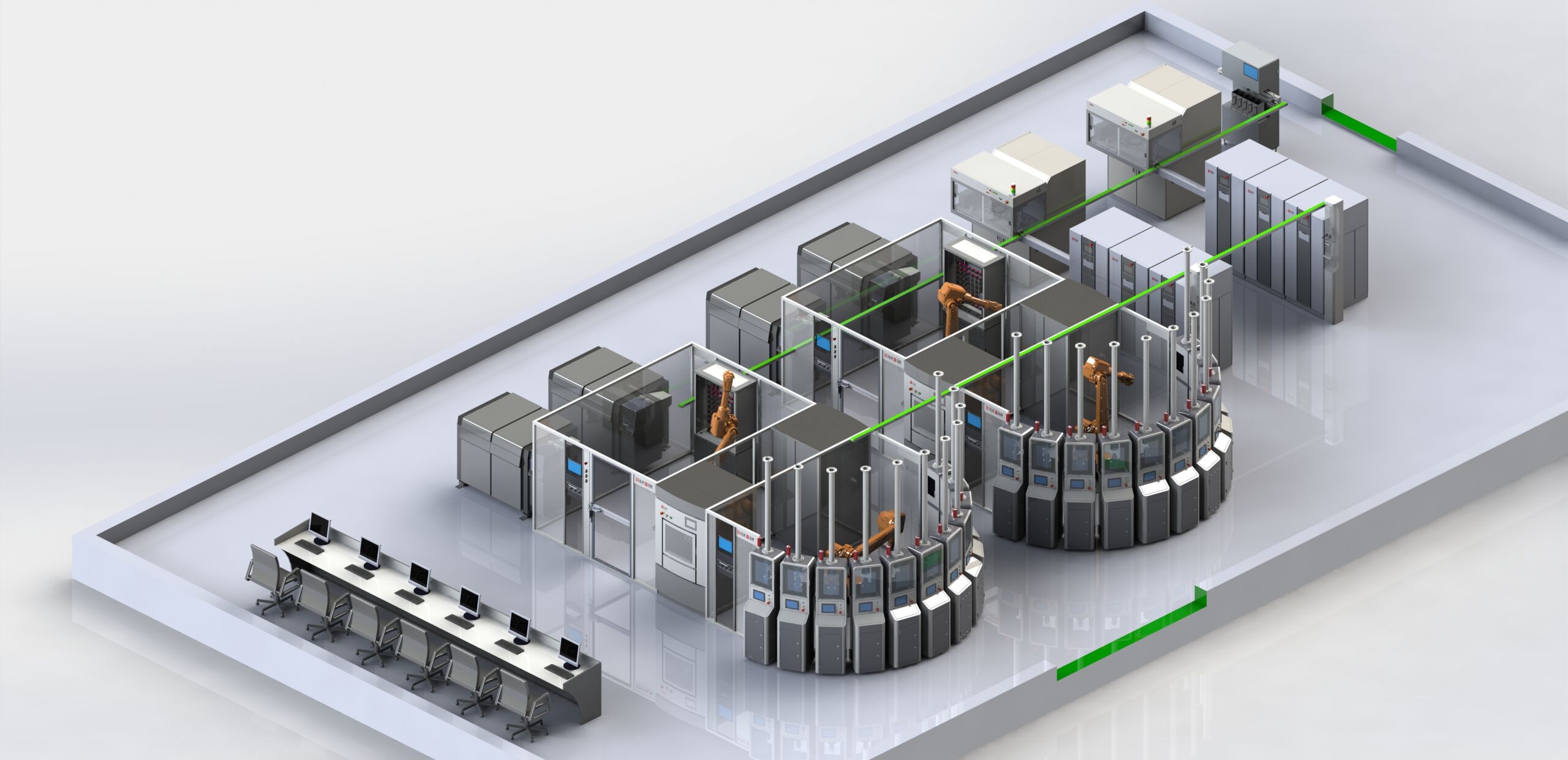
In today's competitive manufacturing landscape, factory owners and operations managers are under constant pressure to reduce costs, improve output quality, and shorten production cycles. The answer to these challenges increasingly points in one direction: automation. Automatic production lines are no longer a luxury reserved for large-scale enterprises — they have become a strategic necessity for any facility serious about improving its return on investment. Understanding why automation drives ROI requires looking beyond the initial capital outlay and examining the full operational picture.
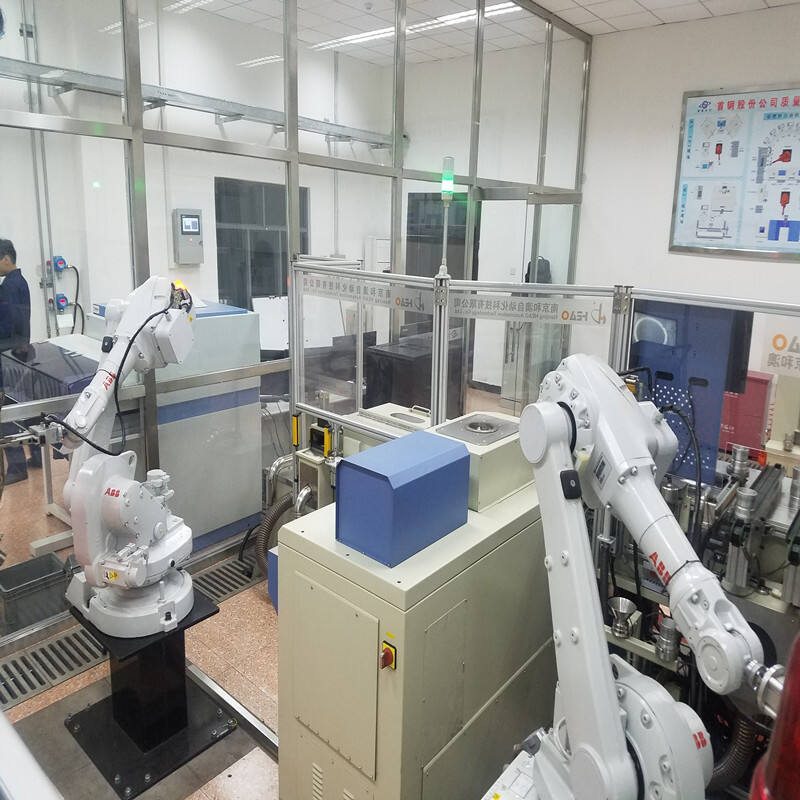
Factory ROI is shaped by a complex mix of labor efficiency, material utilization, defect rates, throughput speed, and downtime frequency. Automation directly influences every one of these variables. When a production line operates with consistent, machine-driven precision rather than relying solely on manual intervention, the cumulative financial gains compound over time. This article explores the specific mechanisms through which automation elevates factory ROI, and why the business case for investing in automatic production systems has never been stronger.
The Direct Financial Impact of Automation on Production Costs
Labor Cost Reduction Without Sacrificing Output
One of the most immediate and measurable ways automation improves factory ROI is through the restructuring of labor costs. Manual production lines require large workforces to maintain throughput, and labor costs — including wages, benefits, training, and turnover — represent a significant share of total operating expenses. Automation allows facilities to reallocate human resources toward higher-value tasks such as quality oversight, process engineering, and equipment maintenance.
This does not mean automation eliminates jobs entirely. Rather, it shifts the labor model toward a leaner, more skilled workforce that operates and supervises automated systems. The result is a lower cost-per-unit produced, which directly improves gross margins. Over a multi-year horizon, the savings from reduced direct labor often exceed the initial investment in automation infrastructure by a substantial margin.
Facilities that have transitioned to automated production lines consistently report that their cost-per-unit metrics improve within the first year of operation. The compounding effect of these savings, reinvested into further process improvements, creates a self-reinforcing cycle of efficiency that manual operations simply cannot replicate.
Material Waste Reduction Through Precision Control
Raw material costs are a major driver of production expenses, and waste is one of the most damaging leaks in any factory's financial performance. Automation introduces a level of precision in material handling, cutting, mixing, and assembly that human operators cannot consistently match across long production runs. Automated systems apply exact quantities, maintain tolerances within tight specifications, and flag deviations before they result in scrapped product.
When automation is applied at the inspection and quality control stage — such as in raw material inspection systems — factories can identify substandard inputs before they enter the production process. This prevents defective materials from consuming machine time, energy, and downstream labor, all of which represent sunk costs that erode ROI. The financial value of catching a defect at the input stage versus the finished goods stage is significant.
Across industries ranging from food processing to electronics manufacturing, automation-driven waste reduction has proven to be one of the fastest paths to measurable ROI improvement. Even a modest reduction in material waste — say, two to three percent — can translate into hundreds of thousands of dollars in annual savings for mid-to-large production facilities.
How Automation Increases Throughput and Production Capacity
Consistent Speed Across Extended Production Runs
Human operators naturally experience fatigue, variation in pace, and inconsistency over the course of a shift. Automated production lines do not. They maintain the same cycle time at hour one as they do at hour twelve, which means throughput remains predictable and plannable. This consistency is a critical factor in meeting customer delivery commitments and scaling production to meet demand spikes without proportional increases in cost.
Automation also enables factories to run extended shifts or even continuous 24-hour operations without the overtime premiums and fatigue-related quality issues that come with extended manual labor. The ability to increase production hours without a corresponding increase in per-unit cost is a direct multiplier on ROI. More units produced at the same or lower cost per unit means higher revenue potential from the same fixed asset base.
For factories operating in markets with seasonal demand peaks or rapid order fulfillment requirements, the throughput consistency that automation provides is not just a financial benefit — it is a competitive differentiator. Customers increasingly choose suppliers who can guarantee delivery timelines, and automation is the infrastructure that makes those guarantees credible.
Faster Changeovers and Reduced Downtime
Downtime is one of the most expensive realities in manufacturing. Every minute a production line is idle represents lost revenue and fixed costs that continue to accumulate regardless of output. Automation reduces unplanned downtime through predictive maintenance capabilities, real-time monitoring, and faster fault detection. Automated systems can identify anomalies in equipment performance before they escalate into failures, allowing maintenance teams to intervene proactively.
Planned changeovers — the process of switching a production line from one product configuration to another — are also significantly faster with automation. Programmable logic controllers and automated tooling systems can execute changeovers in a fraction of the time required for manual reconfiguration. This flexibility allows factories to run smaller batch sizes economically, respond to custom orders, and reduce finished goods inventory without sacrificing throughput efficiency.
The cumulative effect of reduced downtime and faster changeovers on annual production capacity is substantial. Factories that implement automation often find that their effective production capacity increases by fifteen to thirty percent without any physical expansion of floor space or equipment count — a direct and powerful contribution to ROI.
Quality Consistency and Its Role in Long-Term ROI
Defect Reduction and Its Downstream Financial Effects
Quality failures are expensive at every stage of the production chain. Defective products that reach customers generate warranty claims, returns, rework costs, and reputational damage that can take years to recover from. Automation addresses quality at the source by applying consistent process parameters, eliminating human error in repetitive tasks, and enabling real-time inspection at multiple points in the production flow.
Automated inspection systems, in particular, play a critical role in maintaining quality standards at scale. These systems can evaluate products at speeds and with a level of consistency that manual inspection cannot match. When automation is integrated into the quality control process, defect escape rates drop significantly, and the cost of quality — which includes both prevention and failure costs — improves measurably.
The financial impact of defect reduction extends beyond the immediate cost of scrapped or reworked product. Lower defect rates mean fewer customer complaints, stronger supplier relationships, and the ability to command premium pricing in markets where quality is a differentiating factor. These downstream revenue effects are often underestimated when calculating the ROI of automation investments.
Traceability and Compliance as Value Drivers
Modern automation systems generate detailed production data at every stage of the manufacturing process. This data enables full traceability — the ability to track exactly which materials, machines, and process parameters were used to produce any given unit or batch. Traceability is increasingly required by regulatory bodies and large industrial customers, and the ability to provide it is a prerequisite for entering certain high-value markets.
Automation makes compliance documentation a byproduct of normal operations rather than a separate administrative burden. This reduces the labor cost of compliance management and minimizes the risk of audit failures or regulatory penalties. For factories supplying to industries such as automotive, aerospace, pharmaceuticals, or food and beverage, the compliance value of automation is a direct contributor to market access and revenue protection.
Beyond regulatory compliance, the data generated by automation systems provides management with actionable insights into process performance, bottlenecks, and improvement opportunities. This visibility is itself a form of ROI — it enables faster, better-informed decisions that continuously improve operational efficiency over time.
Strategic ROI Considerations When Investing in Automation
Evaluating Total Cost of Ownership Versus Initial Capital
A common barrier to automation investment is the perception that upfront capital costs are prohibitive. This perspective changes significantly when the analysis shifts from initial purchase price to total cost of ownership over a five-to-ten-year horizon. Automation systems, when properly maintained, have long operational lifespans and declining per-unit costs as cumulative output increases. The ROI calculation must account for labor savings, waste reduction, quality improvements, and capacity gains — not just the purchase price.
Financing structures, government incentives for manufacturing modernization, and the availability of modular automation solutions that can be scaled incrementally have all made automation more accessible to mid-sized manufacturers. The question is no longer whether automation is financially viable — it is how to structure the investment to maximize and accelerate ROI given a specific factory's production profile and growth objectives.
Factories that approach automation as a phased investment — starting with the highest-impact processes such as inspection, material handling, or final assembly — often achieve payback periods of two to four years. This makes automation one of the most financially attractive capital investments available to manufacturing operations today.
Scalability and Future-Proofing the Production Operation
Automation does not just improve current performance — it positions a factory to scale efficiently as demand grows. Manual production lines face a near-linear relationship between output and cost: more production requires more workers, more supervision, and more management overhead. Automated lines break this relationship. Once the core automation infrastructure is in place, incremental capacity increases require far less proportional investment.
This scalability is a strategic asset that compounds ROI over time. As a factory grows its revenue base on an automation-enabled cost structure, profit margins expand rather than compress. The operational leverage created by automation is one of the most powerful financial dynamics available to manufacturing businesses, and it is a primary reason why facilities that invest in automation tend to outperform their manual-operation peers on long-term profitability metrics.
Future-proofing is equally important. As labor markets tighten, wage rates rise, and customer quality expectations increase, the factories best positioned to remain competitive are those that have already built automation into their operational foundation. Investing in automation today is not just about current ROI — it is about ensuring the factory remains viable and competitive in the market conditions of the next decade.
FAQ
How quickly can a factory expect to see ROI after implementing automation?
The payback period for automation investments varies depending on the scale of implementation, the specific processes automated, and the factory's current cost structure. However, many facilities that implement automation in high-impact areas such as inspection, material handling, or assembly report payback periods of two to four years. Labor savings and waste reduction typically begin generating measurable financial returns within the first year of operation.
Does automation only make financial sense for large factories?
No. While large-scale manufacturers were early adopters of automation, the economics have shifted significantly. Modular automation systems, lower hardware costs, and flexible financing options have made automation accessible and financially viable for mid-sized and even smaller production facilities. The key is to identify the processes where automation will have the greatest impact on cost, quality, or throughput, and to start there rather than attempting a full-facility transformation at once.
What role does automation play in quality control and defect reduction?
Automation is one of the most effective tools available for improving quality consistency and reducing defect rates. Automated inspection systems can evaluate products at high speeds with consistent accuracy, catching defects that manual inspection would miss or that would only be identified after significant downstream processing costs had been incurred. By integrating automation into quality control workflows, factories reduce scrap rates, rework costs, and customer returns — all of which directly improve ROI.
Can automation help factories meet compliance and traceability requirements?
Yes. Modern automation systems generate detailed production data as a natural output of their operation, enabling full traceability of materials, process parameters, and production history. This data is invaluable for regulatory compliance, customer audits, and internal quality management. For factories supplying to regulated industries, the compliance capabilities enabled by automation are not just operationally useful — they are often a prerequisite for market access and a direct contributor to revenue protection and growth.