
 EN
EN



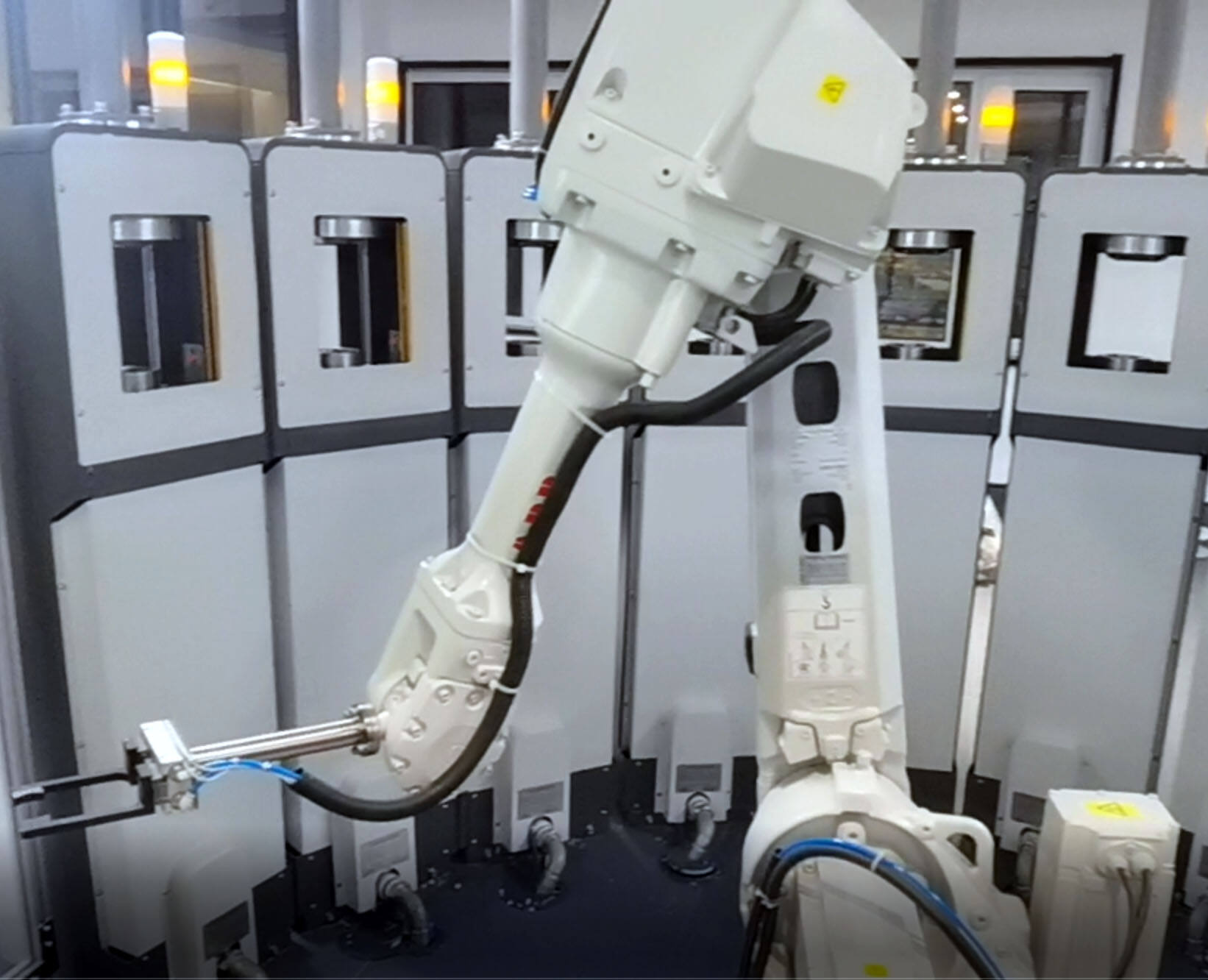
In high-throughput factory environments, the speed and reliability of internal material transfer can directly impact production output, quality control timelines, and operational costs. Two technologies consistently appear in these discussions: the pneumatic tube system and the vacuum conveyor. Both use air pressure differentials to move materials, yet they differ fundamentally in design intent, transfer speed, payload capacity, and suitability for specific industrial contexts. Understanding these distinctions is not merely an academic exercise — for factory managers and process engineers, choosing the wrong technology can mean bottlenecks, increased downtime, and significant capital waste.
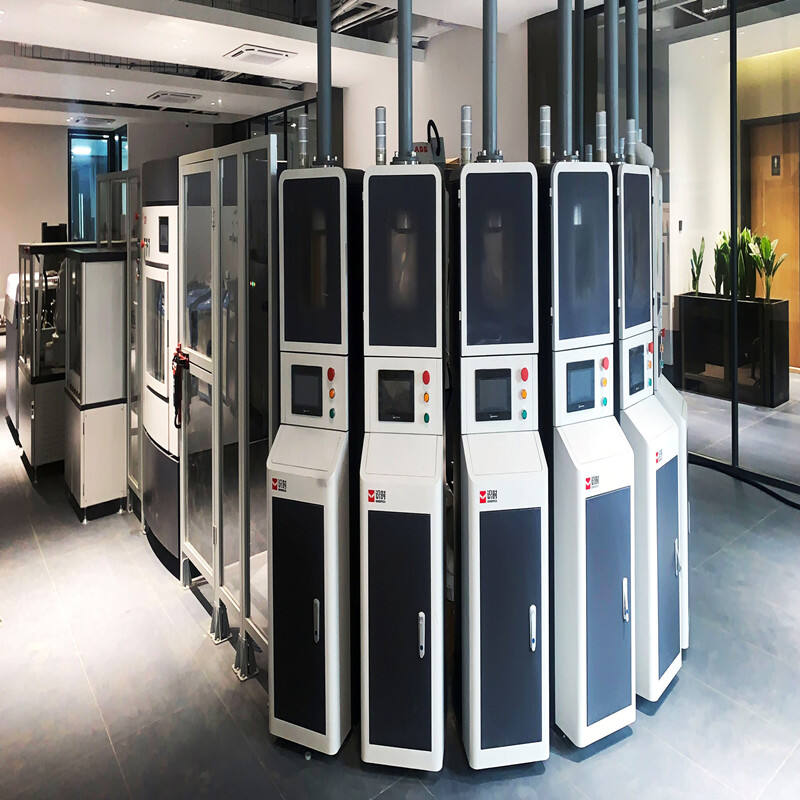
This article provides a structured, practical comparison between the pneumatic tube system and the vacuum conveyor, focused specifically on material transfer speed and factory suitability. Rather than a surface-level overview, we examine the mechanical logic behind each solution, the scenarios where one outperforms the other, and the critical decision criteria that should guide your selection. If your factory needs faster, more reliable internal logistics, the answer lies in understanding precisely how each technology works — and where it reaches its limits.
Understanding How Each Technology Moves Materials
The Core Mechanics of a Pneumatic Tube System
A pneumatic tube system operates by enclosing materials within a carrier — typically a cylindrical capsule — and propelling that carrier through a sealed tube network using compressed air or vacuum pressure. The carrier travels at controlled speeds between defined send and receive stations, making the transfer process highly predictable. Because the payload is enclosed, fragile or sensitive materials are protected from contamination and physical damage throughout the journey.
The design of a pneumatic tube system prioritizes point-to-point transfer efficiency. Carriers move through dedicated pathways without interference from other materials, conveyor belts, or human operators. This makes the technology particularly well-suited for environments where transfer accuracy and payload integrity are as important as raw speed. In laboratory, pharmaceutical, and precision manufacturing contexts, the pneumatic tube system is valued precisely because it combines controlled velocity with secure, enclosed delivery.
Modern pneumatic tube system configurations can include multiple stations, automated routing, and real-time tracking, allowing factories to manage complex internal logistics without manual intervention. The system's ability to handle frequent, small-volume transfers with consistent cycle times is a major operational advantage in environments where throughput depends on reliable, repeatable processes.
The Core Mechanics of a Vacuum Conveyor
A vacuum conveyor, by contrast, moves loose bulk materials — powders, granules, pellets, or small components — through pipelines using a sustained vacuum pressure differential. Materials are drawn directly into the conveyor pipeline and transported in a continuous or semi-continuous stream rather than in discrete enclosed carriers. The vacuum conveyor is fundamentally designed for bulk material handling, where the goal is moving high volumes of loose substance across relatively short distances within a production facility.
Because vacuum conveyors handle loose materials, they are engineered with features like cyclone separators, filter units, and receiving hoppers to manage material discharge. The system's efficiency depends on consistent material properties — particle size, density, and moisture content all affect how smoothly the vacuum conveyor operates. In plastic compounding, food processing, and chemical manufacturing, the vacuum conveyor is a workhorse for feeding production lines with continuous raw material streams.
Unlike a pneumatic tube system, the vacuum conveyor does not use enclosed carriers. This means it is not suitable for materials that need to be isolated, tracked individually, or transferred in discrete batches without cross-contamination risk. The open-pipeline design is an inherent trade-off: excellent bulk throughput, but limited suitability for sensitive, mixed, or individually tracked payloads.
Comparing Transfer Speed: Where Each Technology Excels
Transfer Speed in Pneumatic Tube System Applications
When evaluating a pneumatic tube system for transfer speed, it is important to distinguish between carrier velocity and system throughput. A typical pneumatic tube system operates carrier speeds ranging from 4 to 10 meters per second, depending on tube diameter, pressure settings, and carrier design. While this may appear modest compared to bulk conveying velocities, the critical metric is end-to-end cycle time — the total time from initiating a transfer to confirmed receipt at the destination station.
Because a pneumatic tube system uses dedicated, enclosed pathways, transfers are not subject to queue delays, loading bottlenecks, or interference from other materials in transit. In laboratory and manufacturing environments where samples, small components, or documents must reach their destination within seconds or minutes, the pneumatic tube system consistently delivers on that promise with cycle times that rival or exceed manual courier methods by a significant margin.
For factories that require frequent, time-sensitive transfers — such as moving quality control samples from the production floor to a central lab — the pneumatic tube system offers transfer times that are both fast and highly consistent. This predictability is often more operationally valuable than peak speed alone, because it enables schedulers and process engineers to build reliable workflows around known transfer intervals.
Transfer Speed in Vacuum Conveyor Applications
Vacuum conveyors are optimized for high-volume bulk throughput rather than transfer cycle time. In the right application — continuously feeding a mixer, extruder, or filling machine with loose powder — a vacuum conveyor can move hundreds of kilograms of material per hour with minimal manual intervention. The speed advantage here is measured in mass flow rate, not discrete transfer cycles.
However, vacuum conveyors are not inherently faster than a pneumatic tube system when the comparison involves discrete payloads or time-sensitive transfers. Setting up and calibrating a vacuum conveyor for a new material type takes time, and the system can be slowed significantly by material bridging, filter clogging, or moisture-related flow issues. For factories dealing with diverse material types or frequent product changeovers, these operational variables can erode the speed advantage that vacuum conveyors theoretically offer.
The practical takeaway is that vacuum conveyors win on sustained bulk transfer speed for compatible loose materials, while the pneumatic tube system wins on responsive, reliable cycle time for discrete, enclosed, or sensitive payloads. Applying the wrong technology to the wrong transfer scenario is a common and costly mistake in factory logistics planning.
Factory Suitability: Matching Technology to Application Context
Where a Pneumatic Tube System Fits Best in Factory Environments
The pneumatic tube system is an ideal solution for factories where internal logistics involve high-frequency, time-sensitive transfers of small payloads across significant distances. Pharmaceutical manufacturing plants, for example, rely on pneumatic tube system infrastructure to move samples between production areas and quality control laboratories without delay, reducing hold times and accelerating batch release decisions. Automotive assembly facilities use pneumatic tube system networks to distribute small components, tooling requests, and documentation between remote workstations.
The enclosed carrier design of a pneumatic tube system also makes it the preferred choice whenever payload contamination, cross-contact, or loss during transit would create quality or compliance issues. In cleanroom environments and regulated manufacturing contexts, the pneumatic tube system provides a documented, auditable transfer pathway that open-pipeline systems simply cannot replicate. When factories need to demonstrate chain-of-custody for transferred materials, the pneumatic tube system architecture supports that requirement natively.
Additionally, a pneumatic tube system can be integrated into multi-story or multi-building factory layouts with relatively straightforward tube routing, eliminating the need for elevator logistics or human courier routes. The scalability of modern pneumatic tube system platforms — with programmable routing, multi-station management, and status tracking — makes them adaptable to growing production footprints without proportionally increasing labor requirements.
Where Vacuum Conveyors Fit Best in Factory Environments
Vacuum conveyors are most effective when the factory's core transfer challenge involves moving large quantities of homogeneous loose materials in a continuous or near-continuous flow. Plastics processors, food manufacturers, and chemical producers use vacuum conveyors to keep raw material silos or storage vessels feeding their processing equipment without manual scooping, pouring, or forklift intervention. In these contexts, the vacuum conveyor reduces labor exposure to dust hazards and improves overall production line hygiene.
For factories where production volumes require hundreds of kilograms of material movement per shift, the capital and operational cost of a vacuum conveyor is typically justified by the reduction in manual handling labor and the improvement in throughput consistency. The vacuum conveyor's strength is not speed per unit transfer — it is aggregate throughput efficiency when material type, properties, and destinations are stable and predictable.
That said, vacuum conveyors are a poor fit for factories requiring flexible, multi-material, or individually tracked transfers. The inherent design limitations around material segregation, contamination control, and discrete payload handling mean that a vacuum conveyor cannot replace a pneumatic tube system in contexts where those requirements exist. Factory planners should evaluate both technologies against their specific material types, transfer frequencies, and payload sensitivity requirements before committing to an infrastructure investment.
Key Decision Criteria for Choosing the Right Transfer System
Payload Characteristics and Transfer Sensitivity
The single most important criterion in choosing between a pneumatic tube system and a vacuum conveyor is the nature of the payload itself. If your factory transfers loose bulk materials — powders, granules, pellets — that are chemically stable, non-sensitive, and do not require individual tracking, a vacuum conveyor may be the operationally simpler choice. However, if your factory transfers samples, small components, pharmaceuticals, or any material where integrity, traceability, or contamination prevention is critical, the pneumatic tube system is clearly the more appropriate solution.
A pneumatic tube system protects payloads through the entire transfer journey within a sealed carrier, eliminating exposure to ambient air, dust, vibration, or other materials in the pipeline. This level of protection is not available in a vacuum conveyor system. For factories in regulated industries — pharmaceutical, medical device, food safety testing — this distinction alone often makes the pneumatic tube system the only viable compliance-aligned option.
Transfer Frequency, Distance, and Workflow Integration
Transfer frequency and routing complexity also favor the pneumatic tube system in many factory scenarios. If your facility requires multiple transfers per hour, across multiple floors or buildings, with precise timing and station-level delivery confirmation, the pneumatic tube system infrastructure supports all of these requirements within a single automated network. Vacuum conveyors, by contrast, are typically designed for linear or short-hop transfers between adjacent process points rather than complex multi-node routing.
Distance matters too. A pneumatic tube system can efficiently transfer payloads over distances exceeding 100 meters with no significant speed degradation, provided the tube network is properly engineered. Vacuum conveyors are generally more effective over shorter horizontal distances and face performance limitations when routing involves significant vertical lifts or directional changes. For factories with spatially distributed operations, the pneumatic tube system's routing flexibility is a meaningful structural advantage.
Finally, consider workflow integration. A pneumatic tube system connects directly to digital production management systems through programmable controllers and transfer tracking software, enabling real-time visibility into material movement across the factory. This data integration capability supports lean manufacturing principles and quality management systems in ways that standard vacuum conveyor installations typically cannot match.
FAQ
Can a pneumatic tube system handle the same bulk volumes as a vacuum conveyor?
No, a pneumatic tube system is designed for discrete, enclosed payload transfers rather than continuous bulk volume movement. If your primary requirement is moving hundreds of kilograms of loose material per hour, a vacuum conveyor will generally provide higher aggregate throughput. However, for factories that need reliable, high-frequency transfers of smaller, sensitive, or individually tracked payloads, the pneumatic tube system is the more appropriate and effective technology.
Is a pneumatic tube system difficult to install in an existing factory layout?
Modern pneumatic tube system solutions are designed with flexible tube routing that can accommodate existing factory layouts, including multi-story buildings, curved pathways, and wall penetrations. Professional installation teams typically conduct site assessments to design the optimal tube network for a given facility. While any infrastructure installation requires planning and downtime management, pneumatic tube system retrofits are generally less disruptive than major conveyor infrastructure upgrades.
Which technology requires less maintenance in a high-use factory environment?
Both systems require regular maintenance, but the nature of that maintenance differs. A pneumatic tube system's primary maintenance activities involve carrier inspection, tube joint integrity checks, and blower unit servicing. Vacuum conveyors require regular filter cleaning or replacement, separator maintenance, and pipeline inspection for material buildup. In high-use environments, the pneumatic tube system's enclosed, carrier-based design often results in more predictable and less frequent maintenance interventions compared to vacuum conveyors handling abrasive or moisture-sensitive materials.
Can a pneumatic tube system be used for sample delivery in industrial laboratories?
Yes, the pneumatic tube system is widely used for automated sample delivery in industrial laboratories, quality control environments, and testing facilities. The enclosed carrier design ensures that samples reach the laboratory intact, uncontaminated, and within precisely controlled transfer times. This makes the pneumatic tube system a strongly preferred infrastructure solution for factories that integrate on-site testing into their production quality workflows, reducing sample transit time and eliminating manual courier dependencies.
Table of Contents
- Understanding How Each Technology Moves Materials
- Comparing Transfer Speed: Where Each Technology Excels
- Factory Suitability: Matching Technology to Application Context
- Key Decision Criteria for Choosing the Right Transfer System
-
FAQ
- Can a pneumatic tube system handle the same bulk volumes as a vacuum conveyor?
- Is a pneumatic tube system difficult to install in an existing factory layout?
- Which technology requires less maintenance in a high-use factory environment?
- Can a pneumatic tube system be used for sample delivery in industrial laboratories?