
 EN
EN




When evaluating logistics infrastructure in hospitals, laboratories, and industrial facilities, the financial case for a pneumatic tube system versus manual delivery is rarely straightforward. Decision-makers must weigh upfront capital investment against long-term operational savings, staff productivity gains, and the hidden costs that manual workflows quietly accumulate over time. Understanding this comparison in full is essential before committing to either path.
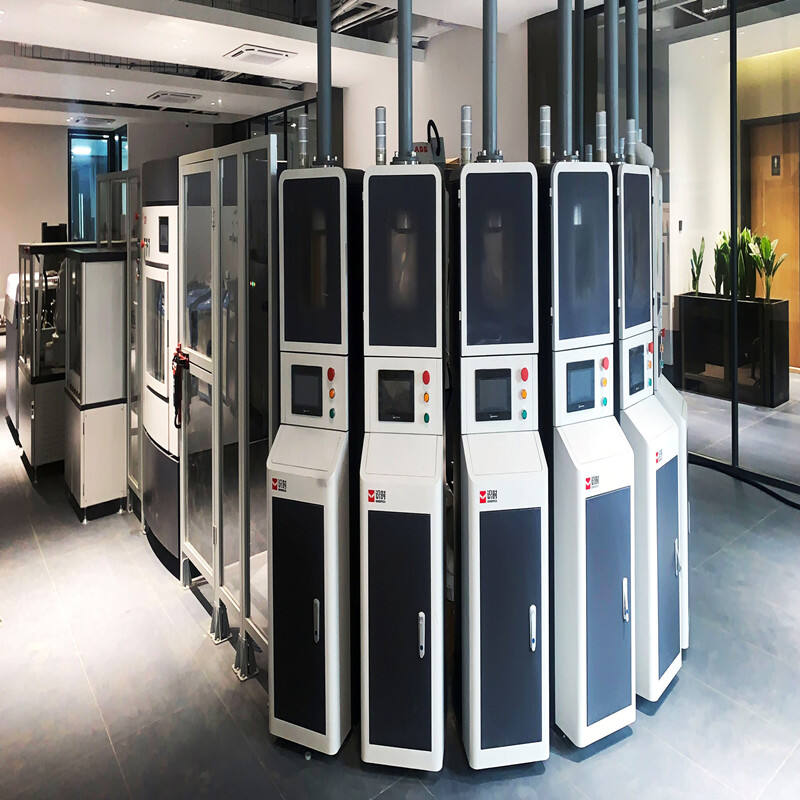
A pneumatic tube system automates the physical transport of samples, documents, medications, and small parcels through a network of pressurized tubes, eliminating the need for staff to walk routes repeatedly throughout a shift. The ROI calculation is not simply about hardware cost — it encompasses labor hours recovered, error reduction, turnaround time improvements, and the compounding value of consistent, reliable delivery across a facility. This article breaks down both sides of the equation so organizations can make a well-informed investment decision.
Understanding the True Cost of a Pneumatic Tube System
Capital Investment and Installation Expenses
The initial cost of a pneumatic tube system includes hardware procurement, tube network installation, station terminals, control software, and integration with existing facility infrastructure. For a mid-sized hospital or laboratory, this investment can range significantly depending on the number of stations, the complexity of routing, and the level of automation required. Fully automated configurations with intelligent routing and real-time tracking naturally carry a higher upfront price than basic point-to-point setups.
Installation requires coordination with facility management, potential structural modifications, and commissioning time. These factors add to the total project cost and must be factored into any honest ROI analysis. However, it is important to recognize that these are one-time expenditures, whereas manual delivery costs recur every single day the facility operates.
Organizations should also account for training costs during the transition period. Staff need to learn how to load carriers, manage exceptions, and interact with the system interface. In most cases, this learning curve is short, and the operational benefits begin materializing within weeks of go-live.
Ongoing Maintenance and Operational Costs
A pneumatic tube system requires periodic maintenance, including carrier inspections, tube cleaning, blower servicing, and software updates. These costs are predictable and manageable when a proper maintenance schedule is followed. Many facilities contract preventive maintenance agreements with their system provider, converting variable repair costs into a fixed annual expense that is easy to budget.
Energy consumption is another operational cost to consider. The blowers and control systems that power a pneumatic tube system consume electricity continuously during operating hours. However, modern systems are designed with energy efficiency in mind, and the power draw is typically modest relative to the labor costs they displace.
When maintenance costs are spread across the system's operational lifespan — often ten to twenty years — the annual cost per delivery transaction becomes remarkably low. This long service life is a key factor that strengthens the ROI case for a pneumatic tube system compared to the perpetual cost of manual staffing.
The Hidden and Visible Costs of Manual Delivery
Direct Labor Costs That Compound Over Time
Manual delivery relies on staff — whether dedicated couriers, nurses, technicians, or administrative personnel — to physically transport items between departments or floors. Each delivery trip consumes time that could otherwise be spent on higher-value clinical or operational tasks. In a busy hospital laboratory, for example, a technician walking samples from collection points to the processing lab multiple times per hour represents a significant diversion of skilled labor.
When you calculate the fully loaded cost of an employee — including salary, benefits, overtime, and management overhead — the annual expense of manual delivery becomes substantial. Multiply that across multiple staff members performing delivery tasks throughout the day, and the cumulative labor cost often exceeds the total installation cost of a pneumatic tube system within just a few years of operation.
Shift coverage adds another layer of cost. Manual delivery must be staffed around the clock in 24-hour facilities, meaning night shifts, weekend premiums, and holiday pay all factor into the true cost of keeping a manual system running. A pneumatic tube system, by contrast, operates continuously without shift differentials or overtime premiums.
Indirect Costs and Operational Risks
Beyond direct labor, manual delivery introduces a range of indirect costs that are harder to quantify but very real in their impact. Delayed sample transport in a clinical laboratory, for instance, extends turnaround times for test results, which can affect patient care decisions and increase length of stay. These downstream effects carry both financial and reputational consequences for healthcare facilities.
Human error is another cost driver in manual delivery workflows. Misrouted items, lost specimens, and documentation gaps all require time and resources to investigate and resolve. A pneumatic tube system with automated tracking and logging eliminates most of these error categories, reducing the administrative burden associated with exception handling.
Staff fatigue and ergonomic strain from repetitive walking and carrying also contribute to indirect costs through increased sick leave and workers' compensation claims. These costs are rarely attributed to the delivery workflow in budget discussions, but they are a genuine consequence of relying on manual transport at scale.
ROI Calculation Framework for a Pneumatic Tube System
Quantifying Labor Savings as the Primary ROI Driver
The most direct way to build an ROI model for a pneumatic tube system is to start with labor. Begin by documenting how many staff hours per day are currently consumed by manual delivery tasks. Multiply those hours by the fully loaded hourly cost of the personnel involved. This gives you the annual labor cost attributable to manual delivery — and represents the primary savings pool that a pneumatic tube system can unlock.
In many facilities, this analysis reveals that a pneumatic tube system pays for itself in labor savings alone within two to four years. When additional value drivers — such as reduced turnaround times, fewer errors, and improved staff satisfaction — are included in the model, the payback period often shortens further.
It is also worth modeling the opportunity cost of redirected labor. When staff are freed from delivery tasks, they can focus on core responsibilities that directly generate value or improve service quality. This productivity uplift is real, even if it does not appear as a direct line item in a cost reduction analysis.
Turnaround Time and Throughput as Value Multipliers
A pneumatic tube system dramatically reduces the time between dispatch and delivery compared to manual methods. In laboratory settings, faster sample transport translates directly into faster result reporting, which supports better clinical decision-making and can reduce unnecessary patient waiting. In pharmacy workflows, rapid medication delivery reduces nurse wait times and supports tighter medication administration schedules.
These throughput improvements have measurable financial value. Shorter laboratory turnaround times can support higher patient volumes without additional staffing. Faster pharmacy delivery can reduce medication-related delays that contribute to extended patient stays. When these downstream benefits are included in the ROI model, the financial case for a pneumatic tube system becomes even more compelling.
Facilities that have implemented a pneumatic tube system consistently report that the speed and reliability of automated transport creates operational benefits that extend well beyond the delivery function itself, reshaping workflows across multiple departments in positive ways.
Factors That Influence the ROI Timeline
Facility Size, Volume, and Complexity
The ROI timeline for a pneumatic tube system is not uniform across all facilities. Larger facilities with higher delivery volumes and more complex routing requirements tend to see faster payback because the labor savings are proportionally greater. A large academic medical center processing thousands of samples per day will recover its investment more quickly than a small clinic with modest transport needs.
The complexity of the existing manual workflow also matters. Facilities where manual delivery is currently performed by highly paid clinical staff — rather than dedicated low-cost couriers — will see a more dramatic labor cost reduction when a pneumatic tube system is introduced. The higher the cost of the labor being displaced, the faster the ROI.
Geographic layout plays a role as well. Facilities spread across multiple floors or buildings, where manual delivery requires elevator use and long walking distances, benefit more from a pneumatic tube system than compact single-floor operations where manual transport is relatively quick.
System Configuration and Automation Level
The level of automation built into a pneumatic tube system directly affects both its cost and its ROI potential. Basic systems with manual loading and simple routing deliver meaningful savings but leave some efficiency gains on the table. Fully automated systems with intelligent dispatch, real-time tracking, and integration with laboratory or hospital information systems deliver the highest throughput and the lowest per-transaction cost.
For high-volume environments such as central laboratories or large hospital campuses, investing in a more sophisticated pneumatic tube system configuration typically accelerates the ROI timeline despite the higher upfront cost. The incremental automation pays for itself through higher utilization rates and reduced exception handling.
Organizations should evaluate their projected delivery volumes carefully when selecting a system configuration. Undersizing a pneumatic tube system to reduce initial cost can create bottlenecks that limit the operational benefits and extend the payback period unnecessarily.
Making the Business Case for Automation
Presenting the ROI to Stakeholders
Building a compelling business case for a pneumatic tube system requires translating operational data into financial language that resonates with budget decision-makers. The core of the presentation should be a clear comparison of the total cost of ownership for the automated system versus the ongoing cost of manual delivery over a five- to ten-year horizon.
Supporting data points — such as current delivery volumes, average trip times, staff hours consumed, error rates, and turnaround time benchmarks — strengthen the case by grounding it in facility-specific reality rather than generic industry claims. Decision-makers are more persuaded by numbers drawn from their own operations than by abstract ROI projections.
It is also effective to highlight the non-financial benefits of a pneumatic tube system, including improved staff satisfaction, reduced physical strain, enhanced sample integrity, and better compliance with transport protocols. These qualitative factors often resonate strongly with clinical and operational leaders who understand the day-to-day realities of manual delivery.
Long-Term Strategic Value Beyond Cost Savings
A pneumatic tube system is not just a cost-reduction tool — it is a strategic infrastructure investment that supports facility growth and operational resilience. As patient volumes increase or laboratory throughput expands, a well-designed pneumatic tube system scales to meet higher demand without proportional increases in staffing costs. This scalability is a significant long-term advantage over manual delivery, which requires additional headcount to handle volume growth.
Automation also supports quality and compliance objectives. A pneumatic tube system provides an auditable record of every transport transaction, which is valuable for accreditation purposes and for investigating any delivery-related incidents. This traceability is difficult and expensive to replicate in a manual delivery environment.
Ultimately, the decision to invest in a pneumatic tube system is a decision to build a more efficient, reliable, and scalable delivery infrastructure — one that pays dividends not just in the first few years of operation, but across the entire life of the facility.
FAQ
How long does it typically take for a pneumatic tube system to pay for itself?
The payback period for a pneumatic tube system varies by facility size, delivery volume, and labor costs, but most mid-to-large facilities recover their investment within two to five years through labor savings alone. When throughput improvements and error reduction are included in the calculation, the effective payback period is often shorter.
Can a pneumatic tube system handle fragile or sensitive samples safely?
Yes. Modern pneumatic tube systems are engineered with controlled acceleration and deceleration profiles, cushioned carriers, and configurable speed settings to protect fragile items such as blood samples, tissue specimens, and medications. Properly configured systems maintain sample integrity at a level comparable to or better than careful manual handling.
Is a pneumatic tube system suitable for smaller facilities with lower delivery volumes?
Smaller facilities can benefit from a pneumatic tube system, though the ROI timeline may be longer than in high-volume environments. The key is to assess whether the labor currently consumed by manual delivery justifies the investment. In facilities where clinical staff perform delivery tasks, even modest volume reductions in walking time can yield meaningful productivity gains.
What ongoing costs should be budgeted for after a pneumatic tube system is installed?
Ongoing costs for a pneumatic tube system typically include preventive maintenance contracts, carrier replacement, energy consumption, and occasional software updates or hardware upgrades. These costs are predictable and generally modest relative to the labor savings generated. Budgeting for a maintenance agreement from the outset is recommended to keep the system operating at peak performance throughout its service life.
Table of Contents
- Understanding the True Cost of a Pneumatic Tube System
- The Hidden and Visible Costs of Manual Delivery
- ROI Calculation Framework for a Pneumatic Tube System
- Factors That Influence the ROI Timeline
- Making the Business Case for Automation
-
FAQ
- How long does it typically take for a pneumatic tube system to pay for itself?
- Can a pneumatic tube system handle fragile or sensitive samples safely?
- Is a pneumatic tube system suitable for smaller facilities with lower delivery volumes?
- What ongoing costs should be budgeted for after a pneumatic tube system is installed?